Clinical documentation is one of the heaviest administrative burdens in modern medicine. Physicians across specialties routinely spend hours after patient visits catching up on notes, a phenomenon often called "pajama time." The right documentation workflow solution can reclaim that time, reduce burnout, and keep EHR records accurate and compliant.
This list covers the strongest healthcare documentation workflow solutions available in 2026, evaluated on accuracy, EHR integration depth, specialty support, ease of adoption, and overall value. Whether you run a solo practice, a multi-physician group, a hospital system, or an ambulatory surgery center, there is a tool here built for your workflow.
1. ZyDoc
Best for: Physicians and specialty practices seeking AI-powered documentation with verified human expert review
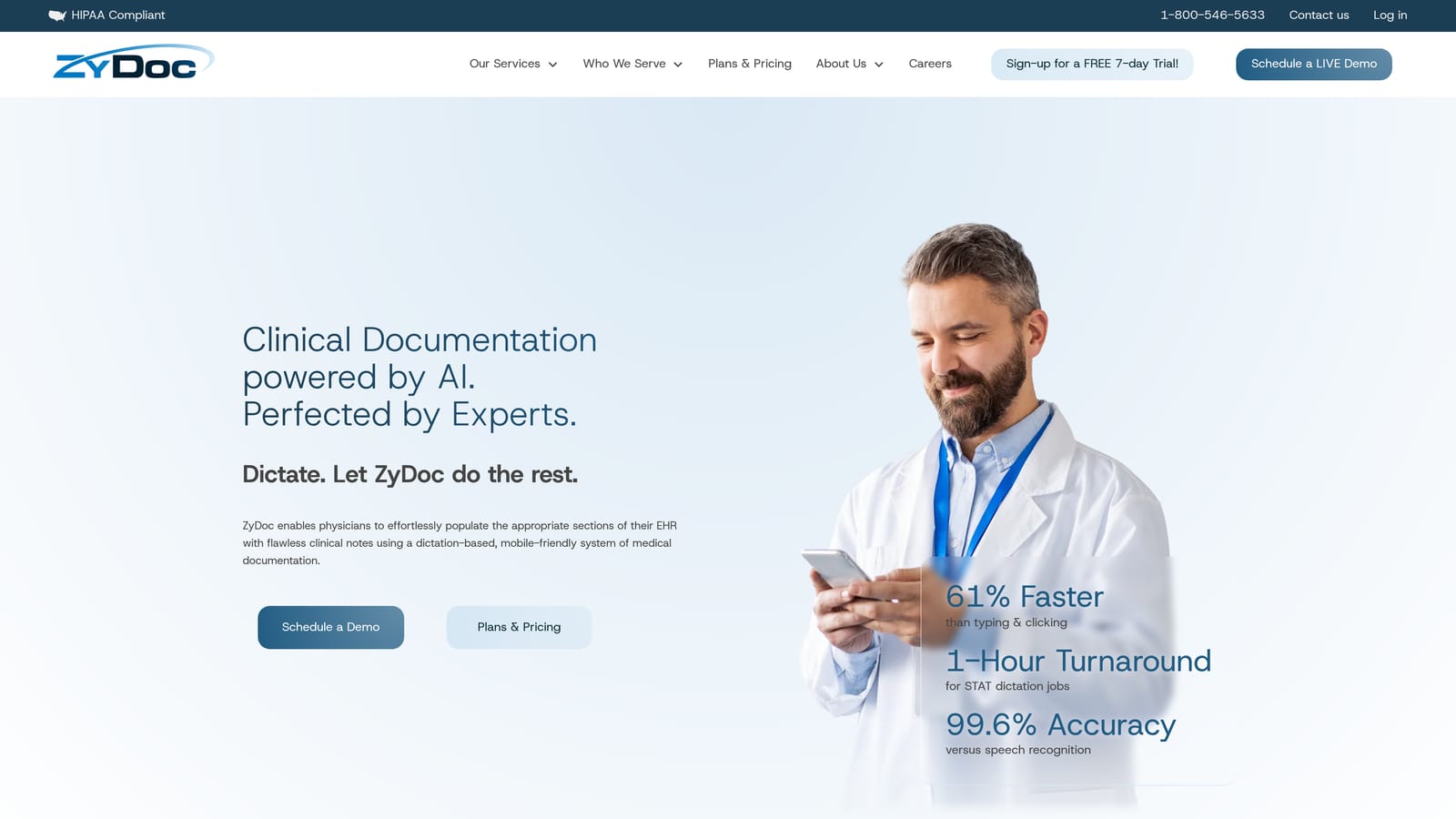
ZyDoc is an AI-powered clinical documentation and transcription platform that pairs speech recognition technology with human expert review, delivering finished clinical notes directly into your EHR.
Where This Tool Shines
Most ambient AI tools hand you a draft and leave the verification to you. ZyDoc takes a different approach: AI captures and structures the encounter, then a human expert reviews and corrects the note before it reaches your EHR. That extra layer of accountability matters enormously in high-stakes clinical environments where a misheard term or a misplaced modifier can affect patient care.
ZyDoc also stands out for its commitment to workflow continuity. It integrates with all major EHR platforms, including Epic, Cerner, and Athenahealth, without requiring you to change how you practice. You speak; ZyDoc handles the rest.
Key Features
AI Plus Human Expert Review: Every note is reviewed by a trained human expert before EHR delivery, combining speed with verified accuracy.
Automatic EHR Population: Finished notes are routed directly into your EHR with no manual copy-paste or workflow disruption.
Universal EHR Compatibility: Supports all major platforms, including Epic, Cerner, Athenahealth, and more, so switching tools does not mean switching systems.
20+ Specialty Coverage: Specialty-specific documentation supports anesthesiology, cardiology, orthopedics, oncology, mental health, and many others.
HIPAA-Compliant Infrastructure: Built with security and compliance as foundational priorities, not afterthoughts.
Best For
ZyDoc is an excellent fit for solo physicians, specialty group practices, and ambulatory surgery centers that want documentation accuracy they can trust without adding IT complexity. It is particularly well-suited to specialties with complex clinical vocabulary where AI-only solutions sometimes fall short.
Pricing
Custom pricing based on practice size and specialty. Contact ZyDoc directly for a quote, and use the ROI calculator on their website to estimate potential time savings for your team.
2. Nuance DAX Copilot
Best for: Large health systems seeking fully ambient AI documentation deeply integrated with Epic and Microsoft 365
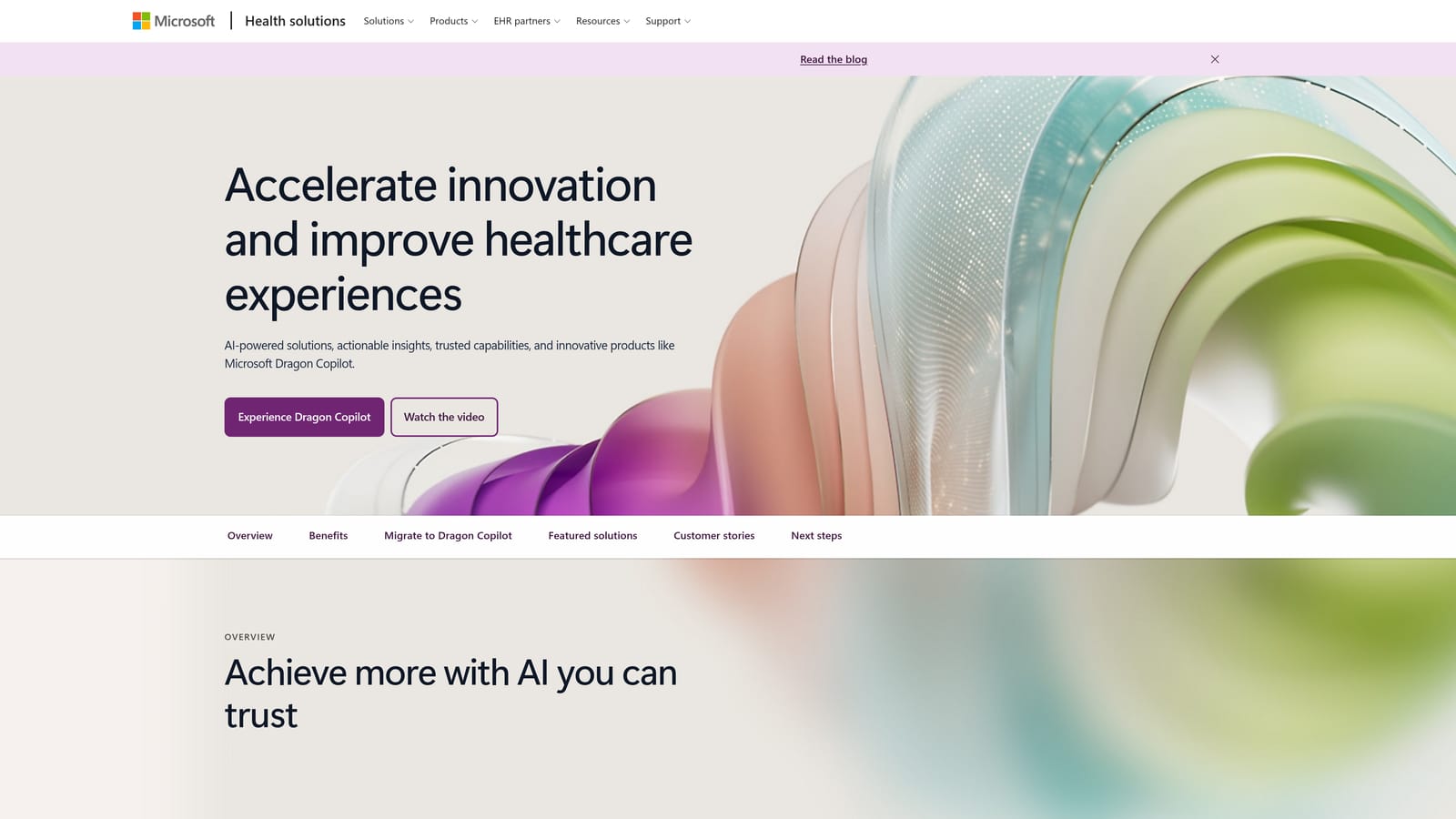
Nuance DAX Copilot is Microsoft's ambient AI documentation solution that passively captures patient-physician conversations and generates structured clinical notes without requiring the physician to dictate.
Where This Tool Shines
DAX Copilot's defining strength is its truly ambient model. There is no button to press, no dictation trigger, and no mode to activate. The system listens during the encounter and generates specialty-aware SOAP and H&P notes automatically. For physicians who find any additional step disruptive, this frictionless approach is genuinely appealing.
As part of Microsoft's broader healthcare AI ecosystem, DAX Copilot benefits from enterprise-grade infrastructure and deep Epic integration. Health systems already invested in Microsoft technologies will find the fit particularly natural.
Key Features
Fully Ambient Listening: No dictation trigger required; the system captures the encounter passively from start to finish.
Epic and Microsoft 365 Integration: Deep native integration with Epic and the broader Microsoft health ecosystem.
Specialty-Aware Note Generation: Produces structured SOAP and H&P notes tailored to clinical specialty context.
Enterprise Scale Architecture: Designed for health system-wide deployments with centralized administration.
Microsoft AI Ecosystem Access: Connects with Microsoft's broader suite of healthcare AI and productivity tools.
Best For
Health systems and academic medical centers with existing Microsoft infrastructure and Epic deployments. Less suited for small independent practices given its enterprise pricing model and deployment complexity.
Pricing
Enterprise pricing; contact Nuance or Microsoft directly for a customized quote based on deployment scale.
3. Suki AI
Best for: Independent and mid-size practices wanting a voice-command AI assistant for EHR navigation and note entry
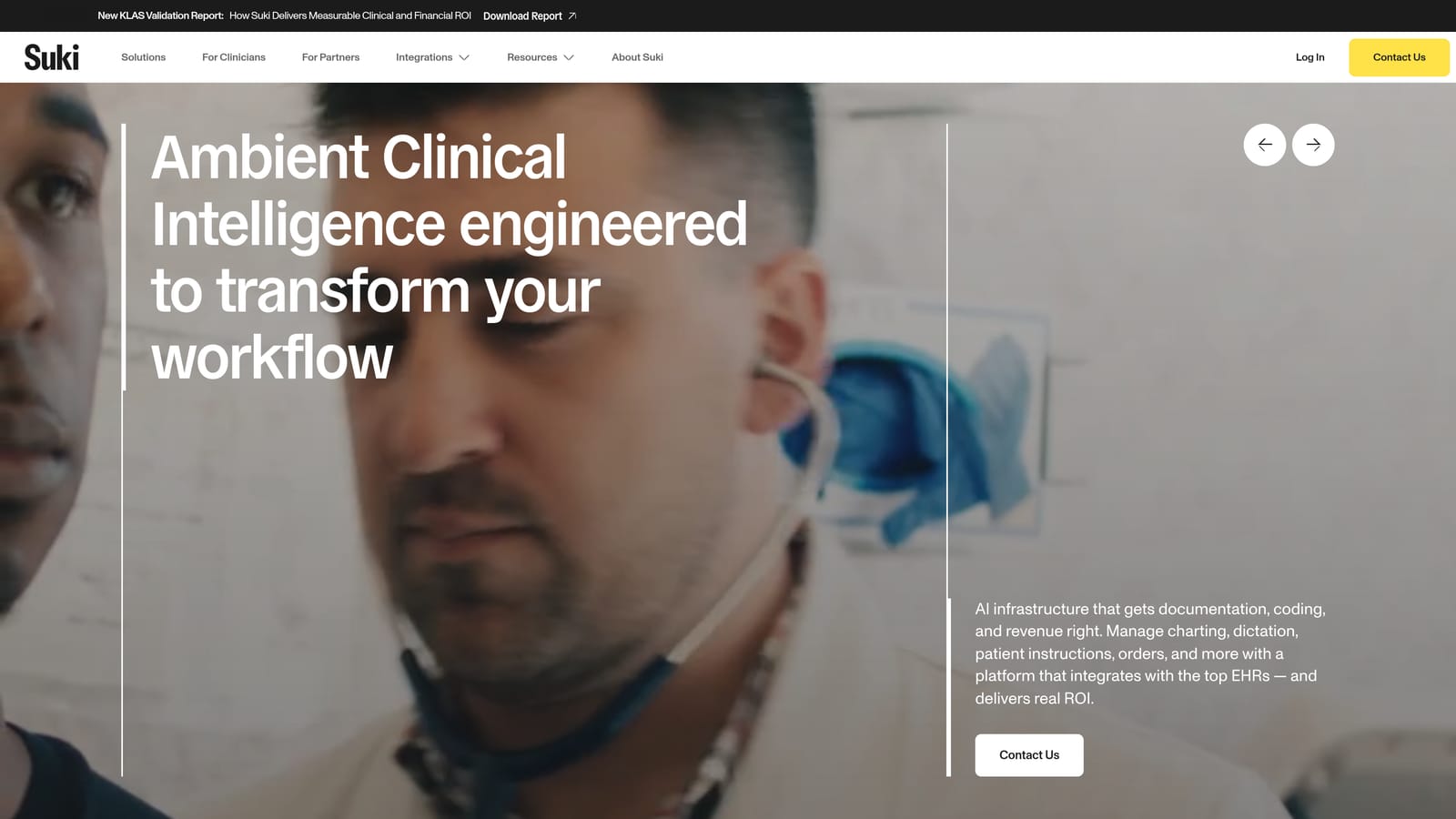
Suki AI is a voice-powered AI assistant that lets physicians navigate EHR fields and dictate clinical notes using natural language commands from a smartphone or tablet.
Where This Tool Shines
Suki takes a command-based approach that gives physicians more direct control than fully ambient tools. You speak naturally, Suki interprets the intent, and the right EHR fields get populated. It is a good middle ground for physicians who want AI assistance without completely relinquishing control of the documentation process.
The lightweight app design is a practical advantage. Suki runs on smartphones and tablets, making it accessible without specialized hardware or complex IT setup. An ambient note generation mode is also available for physicians who want a more passive capture option.
Key Features
Conversational Voice Commands: Natural language commands navigate EHR fields and populate notes without manual keyboard entry.
Broad EHR Integration: Compatible with Epic, Athenahealth, Cerner, and additional platforms.
Dual Mode Operation: Offers both command-based dictation and ambient note generation depending on physician preference.
Mobile-First Design: Runs on standard smartphones and tablets with minimal hardware requirements.
Specialty Coverage: Supports primary care and several specialty contexts out of the box.
Best For
Independent physicians and mid-size group practices looking for a flexible, mobile-friendly AI assistant that does not require a full enterprise IT deployment to get started.
Pricing
Subscription-based model; contact Suki directly for current pricing tiers and available plans.
4. Abridge
Best for: Health systems that want to generate both clinical notes and patient-facing visit summaries from a single encounter
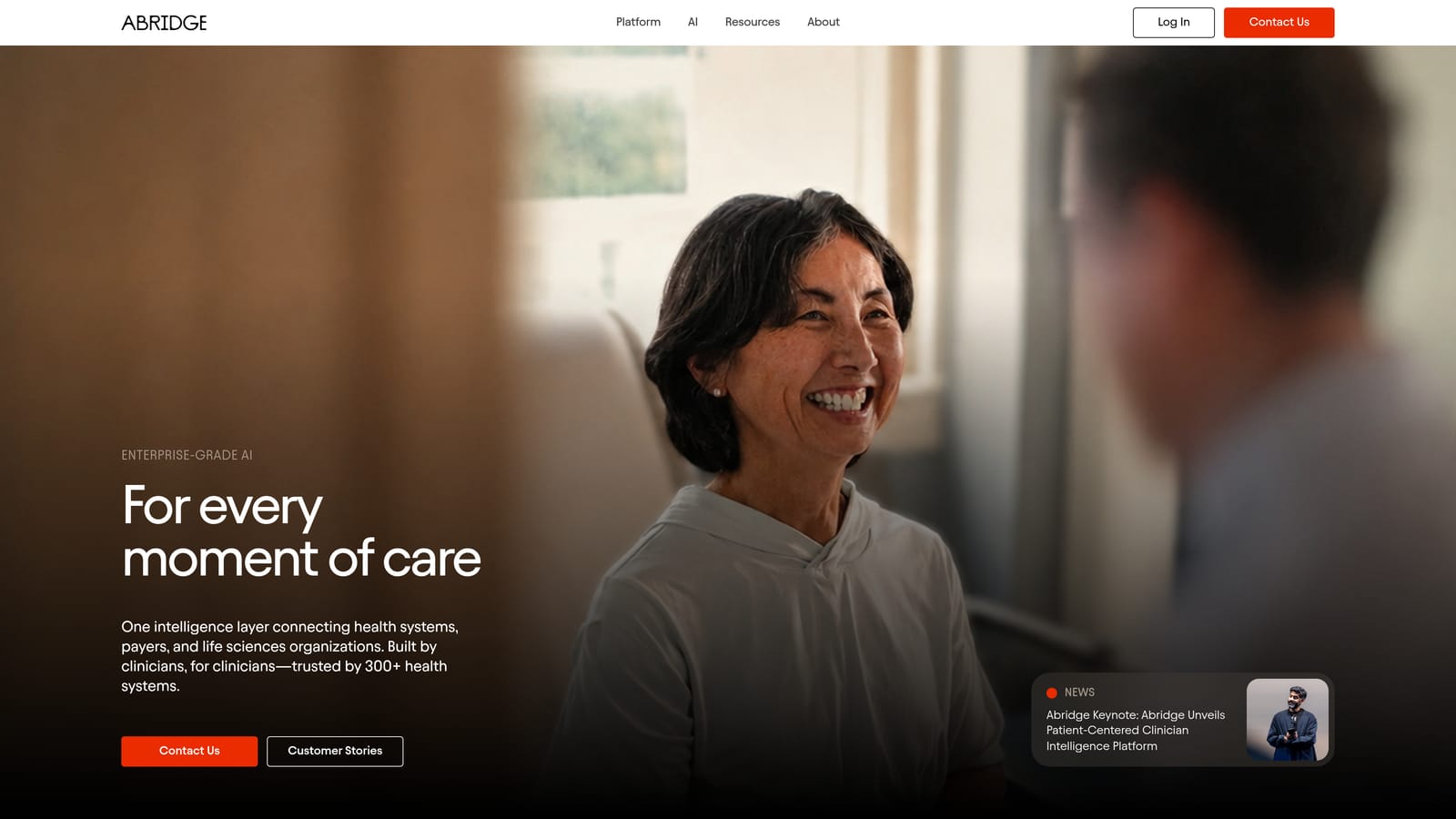
Abridge is an AI documentation platform that simultaneously generates structured provider notes and patient-friendly visit summaries from the same clinical encounter, with strong Epic integration and enterprise health system partnerships.
Where This Tool Shines
Abridge's most distinctive capability is its dual output model. While most documentation tools focus exclusively on the provider note, Abridge generates a patient-facing summary at the same time. This supports patient engagement goals and reduces the separate effort of producing after-visit summaries, which is particularly valuable in systems focused on health literacy and care coordination.
Abridge has built notable health system partnerships and brings multilingual support for diverse patient populations. Its in-workflow Epic integration means physicians can review and finalize notes without leaving their existing EHR environment.
Key Features
Dual Document Generation: Produces both the clinical note and a patient-friendly summary from a single encounter capture.
Real-Time Ambient Capture: Listens during the encounter and structures content without requiring post-visit dictation.
Epic In-Workflow Review: Note review and finalization happen inside Epic, preserving existing EHR workflows.
Multilingual Support: Accommodates diverse patient populations with support for multiple languages.
Enterprise Deployment Model: Built for health system-scale rollouts with established partnership infrastructure.
Best For
Health systems and academic medical centers prioritizing both clinical documentation efficiency and patient engagement, particularly those serving multilingual communities or focused on value-based care models.
Pricing
Enterprise pricing; contact Abridge directly for health system quotes and deployment details.
5. DeepScribe
Best for: Specialty practices with complex clinical vocabulary that need AI models trained specifically for their domain
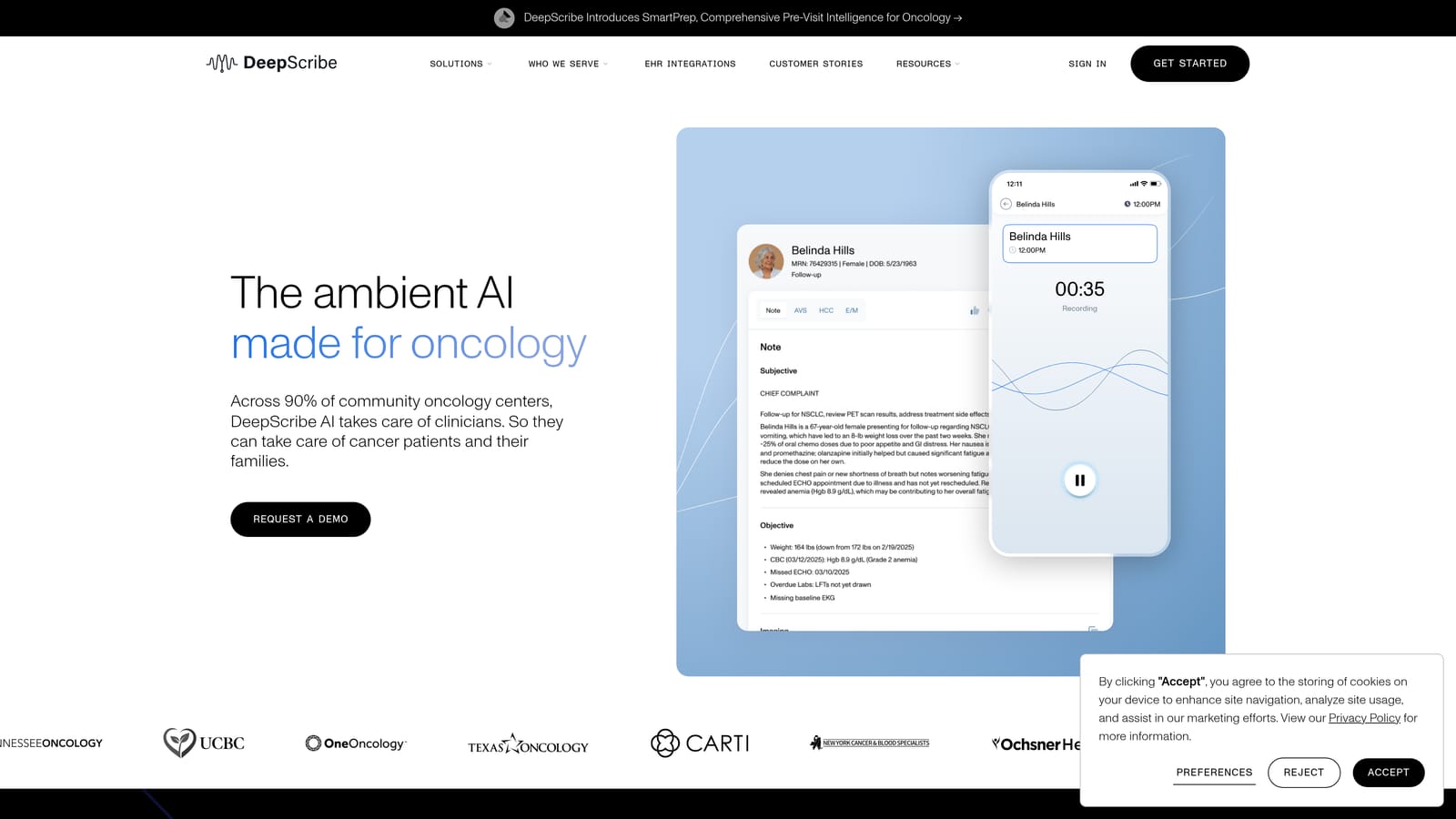
DeepScribe is an ambient AI medical scribe platform built around specialty-trained language models, designed to handle the nuanced clinical vocabulary found in high-complexity specialty encounters.
Where This Tool Shines
General-purpose AI documentation tools can struggle with specialty-specific terminology. DeepScribe addresses this directly by training its language models on domain-specific clinical language, which can meaningfully improve note accuracy for specialties like oncology, rheumatology, or neurology where vocabulary complexity is high.
Physicians retain final control through a dedicated review and editing interface before any note is submitted to the EHR. This review step, combined with customizable note templates per specialty and provider, gives practices more flexibility to match their existing documentation style.
Key Features
Specialty-Specific AI Models: Language models trained on domain clinical vocabulary for higher accuracy in complex specialty encounters.
Ambient Encounter Capture: Passively records and structures encounters without requiring active dictation.
EHR-Agnostic Integration: Broad integration support across multiple EHR platforms without platform lock-in.
Customizable Note Templates: Specialty and provider-level template customization to match existing documentation preferences.
Pre-Submission Review Interface: Physicians review and edit AI-generated notes before they are submitted to the EHR.
Best For
Specialty group practices, particularly those in high-complexity domains, that want ambient AI documentation with specialty-trained accuracy and physician-controlled final review before EHR submission.
Pricing
Subscription-based; contact DeepScribe for specialty practice pricing and available tiers.
6. Augmedix
Best for: High-volume clinical environments, including emergency medicine and hospital medicine, requiring real-time scribe support
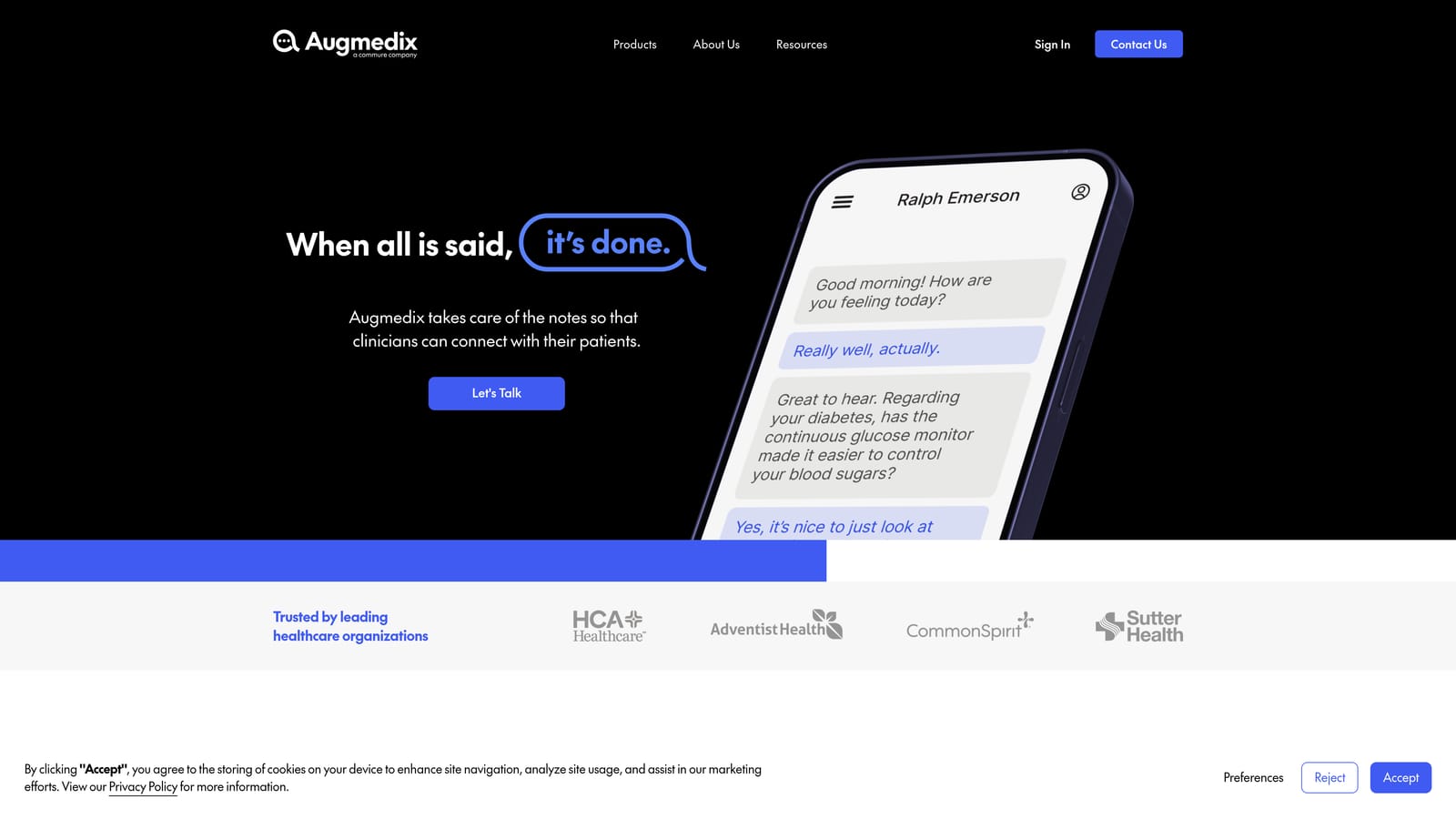
Augmedix is a hybrid documentation service that combines live remote medical scribes with an AI-assisted note drafting layer, designed for fast-paced, high-volume clinical settings.
Where This Tool Shines
Augmedix occupies a unique position in this market: it is not purely an AI tool. Its live remote scribe option connects physicians with a human scribe in real time, which can be particularly valuable in emergency medicine and hospital medicine where encounter pace and documentation complexity make fully automated AI less reliable on its own.
The AI-assisted layer handles after-hours documentation and overflow, giving practices a flexible hybrid model. Augmedix is now part of Commure's broader healthcare operations platform, which adds additional operational tooling for health systems.
Key Features
Live Remote Scribe Option: Real-time human scribe support for high-velocity clinical environments where AI alone may not keep pace.
AI-Assisted Documentation Layer: Handles after-hours documentation, overflow, and lower-complexity encounters automatically.
Multi-Setting Support: Serves emergency medicine, hospital medicine, and outpatient clinical environments.
Flexible Device Compatibility: Accessible via smart glasses, mobile devices, or standard desktop setups.
Commure Platform Integration: Part of a broader healthcare operations ecosystem with additional administrative capabilities.
Best For
Emergency departments, hospitalist programs, and high-volume outpatient practices that want the reliability of human scribe support combined with the efficiency of AI-assisted documentation for lower-acuity encounters.
Pricing
Enterprise and per-provider pricing available; contact Augmedix for a customized quote based on setting and volume.
7. Navina
Best for: Primary care and complex chronic disease management practices focused on pre-visit patient chart preparation
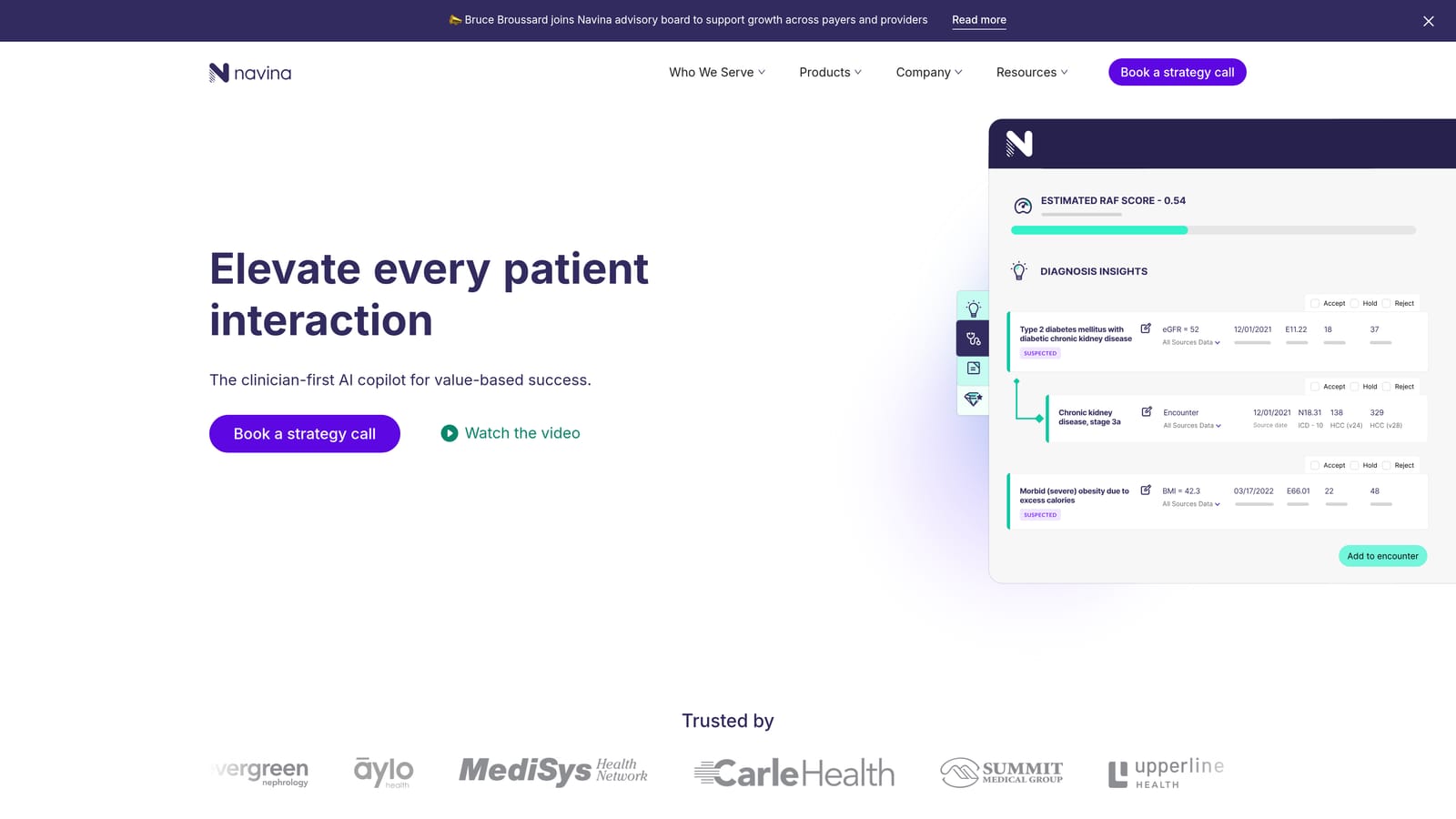
Navina is an AI platform that synthesizes longitudinal patient chart data into concise, actionable pre-visit snapshots, helping physicians walk into each encounter fully informed.
Where This Tool Shines
Navina solves a different problem than most tools on this list. Rather than generating notes during or after an encounter, it prepares physicians before the visit begins. It pulls existing chart data from connected EHRs and surfaces chronic condition gaps, care opportunities, and risk factors in a digestible format, so physicians spend less time scrolling through records and more time with patients.
For practices working in value-based care models or managing complex chronic disease populations, Navina's ability to surface risk adjustment opportunities and care gaps can support both clinical quality and reimbursement accuracy.
Key Features
Automated Chart Synthesis: Consolidates longitudinal patient data into a concise pre-visit snapshot before each appointment.
Care Gap and Risk Factor Identification: Surfaces chronic condition gaps, unaddressed risk factors, and care opportunities proactively.
EHR Data Integration: Connects with major EHRs to pull existing chart information without duplicate data entry.
Value-Based Care Support: Designed to support risk adjustment workflows and quality measure tracking.
Primary Care and Complex Disease Focus: Optimized for practices managing patients with multiple chronic conditions.
Best For
Primary care practices, internal medicine groups, and health systems with value-based care contracts that want to improve pre-visit preparation and reduce the time physicians spend reviewing records manually before each encounter.
Pricing
Contact Navina for practice and health system pricing; plans vary by organization size and use case.
8. Tali AI
Best for: Independent and small-practice physicians seeking an affordable, EHR-agnostic voice documentation tool with minimal setup
Tali AI is a lightweight, browser-based voice documentation tool built for independent physicians who want AI-assisted notes without enterprise pricing or complex IT requirements.
Where This Tool Shines
Not every physician works inside a large health system with a dedicated IT department. Tali was built specifically with that reality in mind. It runs in any browser, works alongside any existing EHR without a formal integration, and is priced accessibly for solo practitioners and small groups who cannot justify enterprise contract costs.
Setup is fast and requires minimal technical infrastructure. For a physician who simply wants to speak their notes and have them ready to paste or review, Tali offers a practical, low-friction entry point into AI-assisted documentation.
Key Features
Browser-Based Accessibility: Works from any browser on any device without software installation or IT configuration.
EHR-Agnostic Design: Functions alongside any existing EHR system without requiring a formal integration partnership.
Affordable Independent Pricing: Transparent subscription pricing with lower-cost tiers designed for solo and small-practice physicians.
Medical Vocabulary Recognition: Handles clinical terminology across primary care and common specialty contexts.
Quick Onboarding: Minimal setup time means physicians can begin using the tool quickly without extended implementation cycles.
Best For
Solo practitioners, small independent practices, and physicians in rural or resource-limited settings who want AI-assisted documentation without the cost or complexity of enterprise-grade platforms.
Pricing
Transparent subscription pricing with an accessible lower-cost tier for independent physicians; visit the Tali website for current plan details.
9. Iodine Software
Best for: Hospital inpatient settings focused on Clinical Documentation Improvement, coding accuracy, and revenue integrity
Iodine Software is an AI-powered Clinical Documentation Improvement platform designed for hospital CDI specialists and HIM departments, focused on improving documentation specificity and protecting reimbursement accuracy.
Where This Tool Shines
Iodine serves a distinct function from every other tool on this list. It is not a note-generation or transcription platform; it is a CDI intelligence engine. It analyzes inpatient documentation and identifies gaps that could affect DRG assignment, reimbursement accuracy, and compliance, then generates targeted queries for CDI specialists to address with the clinical team.
For hospitals where documentation specificity directly affects revenue and quality reporting, Iodine's AI-driven query generation can help CDI programs work more efficiently and catch issues that manual review might miss. The analytics dashboard gives CDI program leaders visibility into team performance and documentation trends over time.
Key Features
AI-Driven CDI Query Generation: Automatically identifies documentation gaps and generates targeted queries to improve specificity before coding.
DRG and Reimbursement Impact Analysis: Surfaces documentation issues that affect DRG assignment and downstream reimbursement accuracy.
CDI and HIM Department Support: Designed for CDI specialists and coding teams rather than direct physician documentation workflows.
Inpatient EHR Integration: Connects with inpatient EHR environments to analyze existing clinical documentation in context.
CDI Program Analytics: Dashboard-level reporting on CDI program performance, query rates, and documentation quality trends.
Best For
Hospital inpatient settings, health system HIM departments, and CDI program leaders who need AI assistance to improve documentation specificity, protect revenue integrity, and support coding accuracy at scale.
Pricing
Enterprise hospital pricing; contact Iodine Software directly for a quote based on facility size and CDI program scope.
Which Tool Is Right for Your Practice?
The healthcare documentation workflow landscape in 2026 is genuinely diverse. Solutions range from fully ambient AI listeners to hybrid human-AI models, pre-visit chart synthesis tools, and specialized CDI platforms. The right choice depends less on which tool has the most features and more on which one fits the specific friction points in your workflow.
Here is a quick-reference guide to help you orient:
Solo or small independent practice: Start with ZyDoc or Tali AI. Both offer accessible onboarding, and ZyDoc adds the human expert review layer for practices where note accuracy is non-negotiable.
Specialty group practice: ZyDoc and DeepScribe are strong contenders, with ZyDoc's human-reviewed model offering an additional accuracy checkpoint alongside DeepScribe's specialty-trained language models.
Large health system: Nuance DAX Copilot and Abridge are built for enterprise scale. If patient-facing summaries matter to your organization, Abridge's dual-output model is worth a close look.
High-volume or emergency medicine setting: Augmedix's hybrid live scribe and AI model is purpose-built for fast-paced environments where fully automated AI may not keep pace reliably.
Hospital CDI and revenue integrity: Iodine Software is in a category of its own here, serving HIM and CDI departments rather than direct clinical documentation workflows.
Pre-visit chart preparation: Navina addresses a different problem than the others and pairs well with a note-generation tool rather than replacing one.
If you are evaluating ZyDoc for your practice or system, the ROI calculator on their website can help you estimate potential time savings based on your actual patient volume and documentation load. When you are ready to see it in action, start your 7-day trial today or contact us to set up a demo for your team and receive 30 days of our full STAT service on us!


.svg)